
 ✓
✓
Daniela, 25
San José, Costa Rica

Connect with 850+ verified Costa Rican women - Ticas who live the pura vida lifestyle and seek genuine love with American men. Real profiles from San José, Liberia, Cartago, and beyond.
✓
San José, Costa Rica
 ✓
✓
Heredia, Costa Rica
 ✓
✓
Liberia, Costa Rica
 ✓
✓
Cartago, Costa Rica
 ✓
✓
Alajuela, Costa Rica
 ✓
✓
Puntarenas, Costa Rica
 ✓
✓
San Ramón, Costa Rica
 ✓
✓
Tamarindo, Costa Rica
Costa Rican women dating is the gateway to experiencing one of the most genuinely joyful relationship cultures in all of Latin America. Costa Rica - a tiny Central American nation with just 5.2 million people - consistently ranks among the happiest countries on Earth according to the United Nations World Happiness Report. That happiness isn't abstract. It flows directly into how Ticas (the affectionate name Costa Ricans use for their women) approach love, family, and partnerships. If you're an American man tired of transactional dating and looking for a woman whose philosophy is built on gratitude, warmth, and authentic connection, Costa Rican women deserve your serious attention.

According to the Happy Planet Index, Costa Rica has been named the happiest country in the world multiple times since 2009 - outranking every European nation, the US, and all of its Latin American neighbors. The secret? A cultural philosophy called pura vida (literally "pure life"), which shapes everything from daily greetings to long-term life decisions. Pura vida isn't just a slogan you'll see on souvenir t-shirts - it's a genuine worldview that prioritizes well-being, simplicity, gratitude, and human connection over material accumulation.
This pura vida philosophy translates directly into how Costa Rican women build relationships. A Tica won't measure your worth by your car or your bank account. She'll measure it by how you treat her family, whether you show up emotionally, and whether you can find joy in a quiet Sunday hike through a cloud forest as easily as a fancy dinner. For American men accustomed to the status-driven dynamics of domestic dating, this shift in values feels like a breath of fresh air - or more accurately, a breath of misty tropical mountain air.
Costa Rica stands out among Latin American countries for its extraordinary commitment to education. The country abolished its military in 1948 and redirected that budget to education and healthcare - a decision that has produced one of the most literate and well-educated populations in Central America. As of 2025, Costa Rica boasts a 98% literacy rate, and more than 30% of women hold university degrees. Many Ticas are bilingual or trilingual, speaking Spanish, English, and sometimes Portuguese.
This educational foundation means that Costa Rican women bring intellectual depth, environmental awareness, and progressive thinking to their relationships - while still cherishing traditional family bonds. Unlike the stereotype of Latin women as exclusively homemakers, many Ticas are professionals who work in eco-tourism, education, technology, and healthcare. They're women who can discuss climate policy, guide you through a rainforest canopy tour, cook a traditional casado for dinner, and tuck their children in with a bedtime story - all with the same pura vida grace.
This unique blend of modern education and traditional warmth is something you'll also appreciate in women from neighboring Panama, though Costa Rican women add a distinctly eco-conscious, nature-loving sensibility that's deeply embedded in their national identity. If your soul stirs for the great outdoors, you'll find a kindred spirit in a Tica. Women from Nicaragua share Central American family values but in a different cultural context, while Honduran women bring their own Caribbean-influenced warmth to the table.
Understanding what a Tica truly seeks in a man is essential for building a relationship that goes beyond initial attraction. Costa Rican dating culture values substance over flash, and these core qualities consistently rise to the top:
These values resonate deeply with what you'll find when exploring connections with Colombian women or Ecuadorian singles, but the Costa Rican emphasis on ecological consciousness and minimalist happiness creates a uniquely grounded approach to romance. A Tica doesn't dream of a mansion - she dreams of a partner who'll watch the sunset with her from a hammock while toucans call from the trees.
Costa Rica's population reflects a predominantly mestizo heritage (mixed European and Indigenous), with significant Afro-Caribbean communities on the Caribbean coast and indigenous groups like the Bribri and Cabécar in the highlands. This cultural mosaic produces women of remarkable beauty - from the fair-skinned, European-featured Ticas of the Central Valley to the bronze, curvy Caribbean beauties of Limón province.

What truly sets Costa Rican women apart in terms of appearance is their commitment to a healthy, active lifestyle. Surrounded by some of the world's most spectacular natural landscapes, Ticas grow up hiking volcanoes, surfing Pacific waves, swimming in waterfalls, and practicing yoga at sunrise. This active outdoor culture gives Costa Rican women a natural vitality and fitness that isn't manufactured in a gym but built through genuine love of movement and nature.
Costa Rican women also take a refreshingly natural approach to beauty. While they take excellent care of themselves, the cultural aesthetic favors minimal makeup, sun-kissed skin, and natural hair over heavily styled looks. A Tica looks just as radiant in hiking boots and a tank top as she does dressed up for a Friday dinner in Escazú. This authenticity - in appearance and in character - is a defining trait that American men find incredibly attractive.
| Cultural Aspect | What to Know |
|---|---|
| Pura Vida Philosophy | More than a greeting - pura vida is Costa Rica's entire worldview. It means appreciating life's simple pleasures, staying positive through challenges, and prioritizing human connection over material success. Embracing this philosophy shows a Tica you understand her culture at its deepest level. |
| Tico/Tica Terms | Costa Ricans call themselves Ticos (men) and Ticas (women) - derived from their habit of adding the diminutive "-tico" to words. Using these terms demonstrates cultural familiarity. Other local slang includes mae (dude/buddy) and tuanis (cool/awesome). |
| Coffee Culture | Costa Rica produces some of the world's finest Arabica coffee, and cafecito is a daily ritual and social bonding experience. Inviting a Tica for coffee is the perfect low-pressure first date. Visiting a beneficio (coffee processing plant) together makes a memorable cultural experience. |
| Family Sundays | Sunday is sacred family time in Costa Rica. Extended families gather for almuerzo (lunch), often cooking casado or olla de carne together. Being invited to a Sunday family meal is a significant sign of acceptance - always bring a dessert or fruit basket as a gift. |
| Catholic Traditions | Approximately 70% of Costa Ricans identify as Catholic. Semana Santa (Holy Week) and the Feast of Our Lady of the Angels on August 2 are major cultural events. Understanding her faith - even if you don't share it - shows deep respect. Church weddings remain the cultural ideal. |
| Nature & Eco-Lifestyle | Costa Rica generates over 99% of its electricity from renewable sources and has pledged to be fully carbon-neutral. Ticas grow up with deep environmental consciousness - beach cleanups, national park visits, and wildlife conservation are routine. Showing eco-awareness earns genuine admiration. |
| Education Focus | Since abolishing its army in 1948, Costa Rica invests heavily in education and healthcare. With a 98% literacy rate and free public universities, Ticas are among the most educated women in Central America. Intellectual conversation, current events, and cultural discussions are valued and expected. |
| Key Celebrations | Independence Day (September 15) with lantern parades, Día de la Madre (August 15 - combined with Assumption Day), Annexation of Guanacaste (July 25), and Fiestas de Zapote (December rodeos and festivals). Celebrating these together deepens your cultural bond. |
Dating a Costa Rican woman - whether through video calls on our platform or during a visit to San José's vibrant barrios or Guanacaste's golden beaches - requires a thoughtful approach that reflects the pura vida values she holds dear. Ticas are warm, intelligent, and deeply loyal, but winning their hearts demands patience, genuine interest, and cultural sensitivity. These proven strategies come from real couples who've built successful Costa Rican-American relationships.
Nothing impresses a Tica more than a man who genuinely understands pura vida - not as a tourist catchphrase, but as a way of living. This means being present during conversations instead of checking your phone. It means appreciating a simple meal of gallo pinto (rice and beans) and café chorreado (drip coffee) as much as a fancy restaurant. It means staying calm in traffic, laughing when things don't go as planned, and finding beauty in ordinary moments. When she sees you embody pura vida, she'll know you're compatible at the deepest level.
Costa Rica is an outdoor paradise, and Ticas love a man who shares that appreciation. Instead of a generic dinner date, suggest a hike to Poás Volcano, a surf lesson in Tamarindo, zip-lining through the Monteverde cloud forest, or a sunset kayak on Arenal Lake. These experiences create emotional bonding that restaurant dates simply can't match. Even from a distance, discussing your love of nature, hiking, and wildlife shows alignment with her core values.
Meeting her family is a milestone that happens relatively early in Costa Rican dating culture - often within weeks, not months. When the invitation comes, prepare thoughtfully: bring a gift for her mother (flowers, pastries, or a high-quality coffee blend), greet every family member individually with warmth, and be ready to spend the entire afternoon or evening. Ask about family history, compliment the food effusively, and show genuine interest in her parents' lives. In Costa Rica, you don't just date the Tica - you date her entire familia.
Ticas have a warm, self-deprecating sense of humor that's central to social connection. Learning key Tico slang - mae (dude), tuanis (cool), diay (well/so), qué chiva (how cool), and of course pura vida for everything positive - will make her light up. Costa Ricans love wordplay and gentle teasing. A man who can joke around in Tico slang, even imperfectly, shows cultural effort that Ticas genuinely adore.
Costa Ricans operate on a famously relaxed schedule. If she says "I'll be there at 7," she might arrive at 7:30 - and she won't understand why that's a problem. This isn't disrespect; it's cultural. In Costa Rica, people prioritize the current moment over strict schedules. Accepting "hora tica" (Tico time) with a smile rather than frustration shows her you understand and respect her culture. Patience, in Costa Rica, is the ultimate sign of emotional maturity.
Costa Rica leads the world in environmental sustainability, and this pride runs deep in its citizens. A Tica notices if you recycle, if you choose eco-friendly products, and if you show concern for wildlife and natural habitats. Mentioning that you'd love to visit a sea turtle conservation project or a cloud forest reserve signals that your values align with hers. Environmental awareness isn't a nice-to-have in Costa Rica - it's a core value that Ticas use to evaluate potential partners.
For an in-depth exploration of cross-cultural dating techniques, our complete guide to dating a Latina woman covers everything from conversation starters to gift etiquette. And to build your romantic vocabulary, explore our Spanish for dating guide - Ticas melt for a man who tries "Eres mi pura vida" (You are my pura vida). To learn how Costa Rican dating culture compares with other Latin traditions, read our article on Latin dating culture and traditions.
The journey from your first online chat with a Costa Rican woman to walking hand-in-hand through a Manuel Antonio beach at sunset is one of the most exhilarating experiences in international dating. Costa Rica's small size, excellent tourism infrastructure, and welcoming culture make it one of the easiest Latin American countries to visit for a first meeting. Here's everything you need to know to plan a successful trip.
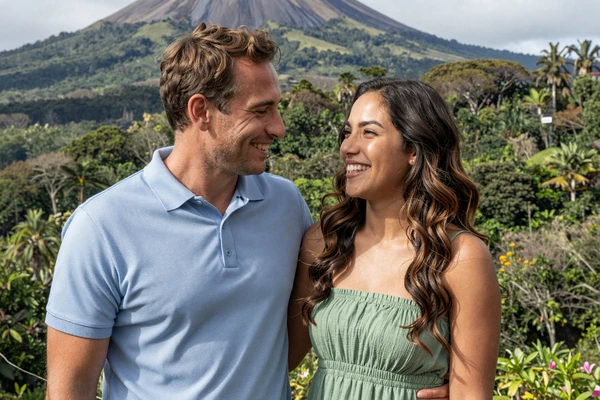
Costa Rica has earned its reputation as Central America's safest and most tourist-friendly country. With no military (abolished in 1948), stable democracy since the 1800s, and a tourism industry that accounts for 8% of GDP, the country is built to welcome international visitors. Here's how to plan your romantic visit:
Our comprehensive first trip to Latin America guide provides a detailed packing checklist, cultural etiquette tips, and safety protocols for first-time visitors.
Costa Rica is small enough to explore thoroughly in two weeks, and each region offers a distinct personality and dating vibe. Here's where to focus your romantic adventure:
When your relationship with a Tica reaches the stage where you're ready to build a life together in the United States, the K-1 fiancée visa is your legal pathway. This visa allows your Costa Rican fiancée to enter the US, where you must marry within 90 days of her arrival.
Key facts about the K-1 visa for Costa Rican nationals:
For a step-by-step walkthrough including document checklists, timeline breakdowns, and cost estimates, read our detailed K-1 visa guide for Latin brides.
Transparency builds trust, so let's address the most frequent questions American men have about pursuing Costa Rican women:
Concern: "Is Costa Rica expensive compared to other Latin American destinations?"
Reality: Yes, Costa Rica is pricier than countries like Nicaragua, Honduras, or Guatemala - roughly comparable to Mexico or Panama. However, the excellent infrastructure, safety, English proficiency, and ease of travel make it outstanding value. Think of it as paying a modest premium for the best travel experience in Central America. A two-week dating trip is very feasible on a $3,000-$4,000 budget including flights.
Concern: "Are Costa Rican women interested in older American men?"
Reality: Costa Rican culture is quite accepting of age-gap relationships, though generally more moderate than some other Latin countries. A 10-15 year age difference is considered perfectly normal. What matters most to a Tica is your character, emotional availability, and willingness to embrace her culture - not your birth year. Costa Rican women who seek international partners value maturity, stability, and life experience.
Concern: "Will there be a language barrier?"
Reality: Costa Rica has one of the highest English proficiency rates in Central America, especially among educated urban women. Many Ticas in San José, Heredia, and tourist areas speak conversational to fluent English. Our platform's real-time translation tools handle any remaining gaps. That said, learning basic Spanish - and especially Tico slang - will dramatically deepen your connection and earn her respect.
Concern: "How do I know she's genuine and not just after a green card?"
Reality: Costa Rica has the highest GDP per capita in Central America and one of the strongest middle classes in Latin America. Costa Rican women enjoy free healthcare, free education, and one of the highest quality-of-life indexes in the region. Most Ticas on our platform are motivated by genuine romantic connection, not immigration needs. Our verification process includes background reviews to identify and filter out non-genuine profiles.
Key Takeaway: Costa Rican women dating offers American men an extraordinary opportunity to connect with educated, eco-conscious, genuinely joyful women who approach relationships with the same pura vida philosophy that makes Costa Rica the happiest country in Latin America. With direct flights under 3 hours from Miami, visa-free entry, one of the safest countries in the Americas, and 850+ verified Tica profiles on our platform, your pura vida love story can begin today.
If Costa Rica's nature-loving culture resonates with you, you might also discover meaningful connections with women from neighboring Panama, which shares Costa Rica's modern infrastructure and Caribbean charm. Explore the warm-hearted devotion of Nicaraguan women for a more traditional Central American experience, or discover the passionate energy of Colombian women just a short flight south. For deeper insight into what motivates Latin women to seek international partners, read our article on why Latin women seek American men. And don't miss our online dating safety tips to ensure your experience is both successful and secure.
Pura vida literally translates to "pure life," but in Costa Rica it's an entire philosophy of living. It means finding joy in simplicity, staying optimistic through challenges, and valuing human connections over material possessions. In dating, this translates to Ticas who prioritize emotional authenticity over wealth, who value experiences (a hike together, a home-cooked meal) over expensive gifts, and who approach relationships with warmth, gratitude, and genuine openness. Embracing pura vida shows a Costa Rican woman you understand her culture at its core.
Costa Rica is widely considered the safest country in Central America and one of the safest in all of Latin America. The country abolished its military in 1948, enjoys one of the longest-running democracies in the Americas, and welcomes over 3 million international tourists annually. Major tourist areas in San José, Guanacaste, and the Central Valley are well-policed. Standard urban precautions apply: use registered taxis or Uber, stay in established neighborhoods, and avoid isolated areas after dark. The Global Peace Index consistently ranks Costa Rica as safer than the US.
Family approval is extremely important in Costa Rican dating culture. Ticas maintain close bonds with parents, siblings, and extended family, and their parents' opinion of a potential partner carries significant weight. Family introductions typically happen within the first few weeks of serious dating. Sunday family lunches are sacred traditions you'll be expected to attend regularly. Winning over her mother is especially critical - bring gifts (flowers, pastries, quality coffee), be respectful and engaging with all family members, and show genuine interest in their lives. In Costa Rica, marrying the woman means marrying into her entire family.
Costa Rica has one of the highest English proficiency rates in Central America. Many educated women in San José, Heredia, and tourist areas speak conversational to fluent English, particularly those with university degrees or who work in eco-tourism, technology, and international business. However, Spanish remains the primary language, and making the effort to learn - even basic phrases and Tico slang like "mae," "tuanis," and "pura vida" - will dramatically deepen your connection. Our platform offers real-time translation tools to bridge any remaining language gaps during chats and video calls.
San José and the Central Valley (including Escazú, Heredia, and Cartago) are the best areas for meeting educated, career-driven Ticas in a cosmopolitan setting. Guanacaste's Pacific coast (Liberia, Tamarindo) offers adventurous, outdoorsy women who love beach life. Puntarenas and Jacó provide a mix of local culture and tourist-friendly infrastructure. For a unique experience, the Caribbean coast (Puerto Viejo, Cahuita) offers Afro-Caribbean Ticas with a laid-back, reggae-influenced vibe. San José is recommended for your first visit as it offers the highest concentration of single, relationship-minded women.
The K-1 fiancée visa process costs approximately $2,025 in government filing fees (Form I-129F plus consular processing). Additional costs include your fiancée's medical examination ($200-$350), travel to the US Embassy in San José, and her one-way flight to the US ($250-$500). After arrival and marriage, Adjustment of Status (Form I-485) costs an additional $1,225. Total estimated cost from filing to green card: $3,500-$4,200 over 12-18 months. Costa Rican nationals enjoy one of the highest K-1 approval rates in Central America due to Costa Rica's strong bilateral relationship with the United States.